




ICAT ha desarrollado un conjunto de herramientas y metodologías prácticas de código abierto, y ha colaborado con sus asociados para su puesta en marcha, con el fin de proporcionar un apoyo eficaz a los esfuerzos de transparencia de países en todo el mundo.
Las siguientes guías y herramientas de la caja de herramientas ICAT están disponibles en español.
-
De la serie de guías de evaluación ICAT:
- Guía de acción no estatal y subnacional Guía de evaluación de los impactos en el Desarrollo Sostenible
- Guía de evaluación de los impactos en el Desarrollo Sostenible
- Guía de evaluación sobre el Cambio Transformacional
- SINAMECC (Sistema Nacional de Métrica de Cambio Climático)
Más información sobre las guías y herramientas disponibles en español aquí.
Which tool is right for you?
Find a Tool
Herramientas y guías destacadas
CAAT
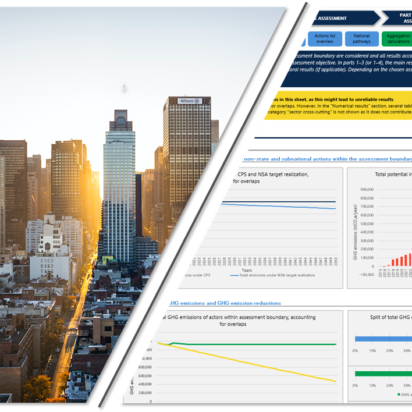
The Climate Action Aggregation Tool (CAAT) supports government experts, analysts and policymakers to identify, quantify and aggregate the impact of non-state and subnational actions. As a result, they can be integrated into mitigation targets, projections...
Read now

Transformational Change Toolkit
About the toolThe concept of transformational change recognizes the fundamental, radical changes in economic activity required to meet the global goals for climate and sustainable development. Transformational change refers to system change, rather than singular,...
Read now

Waste Climate Action Data Tool (WasCAD)
About the toolThe Waste Climate Action Data Tool (WasCAD) supports and facilitates countries to systematically assess the impact of climate actions in the waste sector. It does this by streamlining all aspects of the data...
Read now

Assessment Tool and Guide for Adaptation Project Proposals
According to the IPCC Sixth Assessment Report (2022), for planned adaptation interventions to be successful in leading to societally desirable outcomes, they need to be feasible, have the potential to be effective in reducing climate...
Read now
COMPASS toolbox
About the toolThe Climate action Outcomes and Mitigation Policy ASSessment (COMPASS) toolbox is a selection of climate scenario modelling tools to support decision-makers, analysts and civil society to assess and understand the impacts of climate...
Read now

Air Pollution and Climate Change
About the toolThe Practical Guide on Integrating Air Pollution and Short-Lived Climate Pollutants into Climate Change Transparency Frameworks, developed as a joint effort by the Climate and Clean Air Coalition (CCAC) and ICAT, aims to...
Read now

Just Transitions Monitoring Guide
Climate policies may contribute to positive or negative, intended or unintended impacts across social, economic, and environmental dimensions. These may further exacerbate (or reduce) existing social and economic inequities. As countries transition to low-carbon and...
Read now

Sustainable Development Methodology
Climate action can have both positive and negative impacts on development. By assessing climate impacts with the potential socio-economic impacts of planned and implemented policies, policymakers are able to weigh potential development benefits against potential...
Read now

Transformational Change Methodology
The concept of transformational change recognizes the fundamental, radical changes in economic activity required to meet the global goals for climate and sustainable development. Transformational change refers to system change, rather than singular, stand-alone development,...
Read now

Agriculture Methodology
Climate-conscious agricultural policies represent a large opportunity for countries to reduce their emissions. The Agriculture Methodology supports the assessment of the impact of policies designed to reduce greenhouse gas emissions from the agricultural sector.
Read now

Renewable Energy Methodology
Renewable energy deployment reduces greenhouse gas emissions by replacing the use of fossil fuels in existing installations and/or building new fossil fuel installations.
Read now

Transport Pricing Methodology
With transport emissions increasing at a faster rate than emissions in other sectors, mitigation action is urgently needed. Pricing policies can be an important lever to bring about change in the transport sector.
Read now

Forest Methodology
Forests play a dual role in global climate change. As natural carbon sinks, their destruction or degradation results in massive amounts of carbon being released. However, intact, restored or sustainably managed forests can sequester carbon,...
Read now

Buildings Efficiency Methodology
Buildings represent a core component of our built environments and our environmental impact. Building efficiency measures often represent an important opportunity for substantial greenhouse gas emission reductions.
Read now

Non-State and Subnational Action Methodology
Non-state and subnational actions that contribute to climate change mitigation are becoming increasingly important and need to be explicitly considered by countries when they determine their national contributions.
Read now

Stakeholder Participation Methodology
Broad stakeholder participation is an essential factor for fostering greater transparency, effectiveness, trust and ambition in climate policies.
Read now

Technical Review Methodology
Independent technical reviews of policy impact assessments supporting learning the improvement of assessments over time. They also enhance transparency and trust in the implementation of policies, and the reporting of their impacts.
Read now
Assessment Tool and Guide for Adaptation Project Proposals
According to the IPCC Sixth Assessment Report (2022), for planned adaptation interventions to be successful in leading to societally desirable outcomes, they need to be feasible, have the potential to be effective in reducing climate...
Read now

Assessing Climate Change Driven Losses and Damages
National governments face increased difficulties to manage the impacts of climate change that occur despite or in the absence of adaptation action. Loss and damage has become a most prominent issue in climate action.
Read now

Integrating Subnational and Non-State Actors into M&E Systems for Adaptation
Multiple actors involved in the planning and implementation of climate change adaptation. Policy-owners need to take the actions of sub-national and non-state actors into account when tracking the progress being made towards achieving the objectives...
Read now
Todas las herramientas y guías ICAT
Transformational Change Toolkit
About the toolThe concept of transformational change recognizes the fundamental, radical changes in economic activity required to meet the global goals for climate and sustainable development. Transformational change refers to system change, rather than singular, stand-alone development, and involves multiple...
Read now
COMPASS toolbox
About the toolThe Climate action Outcomes and Mitigation Policy ASSessment (COMPASS) toolbox is a selection of climate scenario modelling tools to support decision-makers, analysts and civil society to assess and understand the impacts of climate action and policies.
Read now

TraCAD
About the toolThe Transport Climate Action Data Tool (TraCAD) supports and facilitates countries to systematically assess the impact of climate actions in the transport sector. It does this by streamlining all aspects of the data collection process, offering standard methodologies,...
Read now

A road map for establishing information systems for climate action and support
This publication aims to provide an overview of the aspects to consider when designing and developing an information system to support the processes leading to the transparency of climate action and support within the country. As such, it provides insights...
Read now
TraCAD
About the toolThe Transport Climate Action Data Tool (TraCAD) supports and facilitates countries to systematically assess the impact of climate actions in the transport sector. It does this by streamlining all aspects of the data collection process, offering standard methodologies,...
Read now