Back to Where We Work


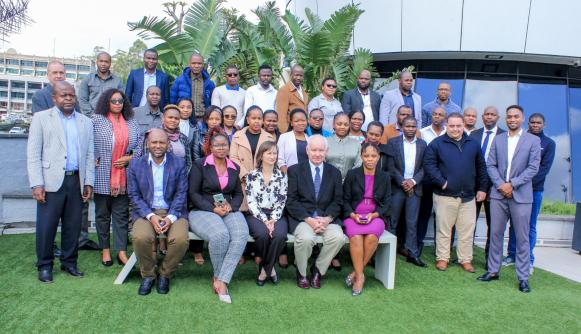
Stakeholder Engagement: Key for Effective Climate Action
View Story



In a first project, ICAT supported capacity building to develop robust sustainable data collection processes, including institutional arrangements, and improved Tier 2 data for future inventory compilation. A renewable energy policy assessment was also conducted in order to model the climate, economic and social impacts of various scenarios, particularly in the agriculture and LULUCF sectors. A second project strengthened the capacity of national stakeholders to develop a robust MRV system for the adaptation in health and water sectors, which can then be replicated in other adaptation sectors. In addition, the project set up a Bioenergy Task Force to develop a Bioenergy Policy, in an effort to provide clear direction to Eswatini’s biomass energy sector and create an enabling environment to enhance biomass renewable energy development and investment in this sector.

Building capacities of technicians in the MTEA, line departments and national experts and institutions, as well as other stakeholders, to develop a robust MRV framework for the health and water sectors. The process for developing this MRV framework can then be rolled out in other adaptation sectors.
Building capacities of technicians in the MTEA, line departments and national experts and institutions, including the University of Eswatini (UNESWA), as well as other stakeholders, to develop robust sustainable data collection processes, including institutional arrangements, and improved Tier 2 data for future inventory compilation. In addition, the project aims to undertake a renewable energy policy assessment in order to model the climate, economic and social impacts of various scenarios on emissions and the community and the economy as a whole, particularly in the agriculture and LULUCF sectors. This project has both an adaptation and a mitigation component.



If you want to find out more about the ICAT project in Eswatini, Please contact the ICAT Secretariat.
Contact