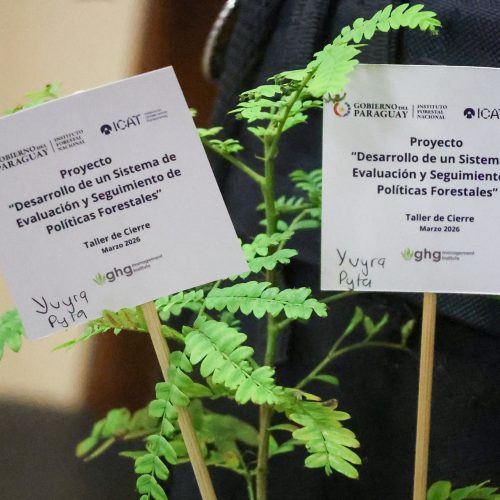
A new ICAT project was launched in Vanuatu, with an inception workshop held on 14 November.
The project aims to improve greenhouse gas inventory measurement, reporting, and verification frameworks in Vanuatu for the key sectors: waste, industrial processes and product use, agriculture, and energy. Additionally, it will assess the impacts of agriculture sector climate policies on greenhouse gas emissions and on sustainable development, and develop recommendations for integrating such policies into Vanuatu's enhanced nationally determined contributions (NDCs).
Vanuatu’s Department of Climate Change is leading the project implementation, with support from international experts from the Greenhouse Gas Management Institute, ICAT’s implementing partner for the Vanuatu project. The inception workshop was held to mark the launch of the project and initiate the first step in a continuous process to engage national stakeholders in climate action transparency processes. Vanuatu’s relevant stakeholders, including representatives of the energy and agriculture sectors, engaged in a dialogue in an effort to promote the successful achievement of the project’s objectives.
Better inventories to inform better policies
Vanuatu, a country in the southwestern Pacific Ocean, is a net carbon sink, absorbing more carbon dioxide from the atmosphere than it emits. As a small island developing state, Vanuatu is particularly vulnerable to the impacts of climate change, such as sea level rise and the intensification of extreme weather events.
Vanuatu's NDCs outline its plans to reduce its greenhouse gas emissions and adapt to the impacts of climate change. Based on the targets set out in the NDCs, Vanuatu is developing a number of policies and programmes for climate change mitigation and adaptation. Quality data is essential for effective policy planning in the sectors that are most important for climate action in Vanuatu, such as agriculture, energy and others. The ICAT project will work to improve Vanuatu’s capacity to collect and manage this data, which will be used to enhance its greenhouse gas inventory and to provide an evidence base to inform policy-making.
Enhancing data collection for crucial categories in the greenhouse gas inventory will foster collaboration among stakeholders and generate reliable data for policy formulation across various sectors. It will also present an opportunity to strengthen the overall capability of multiple governmental agencies.
Agriculture at the core of climate action in Vanuatu
Agriculture is the backbone of Vanuatu's economy, providing livelihoods for a significant portion of the population. As a result, adaptation measures in the NDCs prioritize the agriculture sector. Using knowledge resources from the ICAT toolbox, including the ICAT Agriculture Methodology and the ICAT Sustainable Development Methodology, the new ICAT project will undertake an assessment of Vanuatu's agricultural climate policies, estimating their potential impacts on greenhouse gas emissions and evaluating their sustainable development impacts, such as impacts on food security and other socio-economic variables.
The results of this exercise will augment Vanuatu's ability to formulate and monitor the effectiveness of policies aimed at enhancing food security and climate resilience in the agriculture sector. The project also anticipates the development of recommendations for incorporating agriculture sector policies into Vanuatu's enhanced NDC, driving higher ambition and more successful climate action.