



Comprising over 40 practical tools, methodologies and guides. The ICAT Toolbox addresses critical areas such as policy impact assessment, NDC tracking, data management, climate finance transparency, and just transitions. These tools are tailored to meet the needs of developing countries, providing step-by-step guidance and methodologies to build robust transparency frameworks. For instance, the Transformational Change Toolkit helps evaluate the potential for systemic shifts towards low-carbon development, while the Climate Finance Transparency Guide assists in tracking and reporting climate finance flows
By offering these resources, the ICAT Toolbox enables countries to strengthen their climate policies, enhance accountability, and foster international trust, ultimately contributing to more effective and equitable climate action.
Which tool is right for you?
Find a Tool
Featured Tools and Guides
CAAT
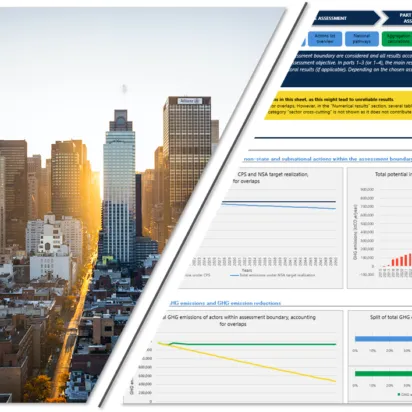
The Climate Action Aggregation Tool (CAAT) supports government experts, analysts and policymakers to identify, quantify and aggregate the impact of non-state and subnational actions. As a result, they can be integrated into mitigation targets, projections...
Read now

GACMO
The Greenhouse Gas Abatement Cost Model (GACMO) is an emission's projection tool that allows countries to carry out rapid, accurate scenario analyses of how a variety of mitigation options across different economic sectors impact emissions....
Read now

Transformational Change Toolkit
The concept of transformational change recognizes the fundamental, radical changes in economic activity required to meet the global goals for climate and sustainable development. Transformational change refers to system change, rather than singular, stand-alone development,...
Read now

Waste Climate Action Data Tool (WasCAD)
The Waste Climate Action Data Tool (WasCAD) supports and facilitates countries to systematically assess the impact of climate actions in the waste sector. It does this by streamlining all aspects of the data collection process,...
Read now

SINAMECC
The SINAMECC system, which is Costa Rica’s National Climate Change Metrics System (Sistema Nacional de Métrica de Cambio Climático, SINAMECC), was designed to improve evidence-based decision making on climate action and policy.
Read now

Assessment Tool and Guide for Adaptation Project Proposals
According to the IPCC Sixth Assessment Report (2022), for planned adaptation interventions to be successful in leading to societally desirable outcomes, they need to be feasible, have the potential to be effective in reducing climate...
Read now
COMPASS toolbox
The Climate action Outcomes and Mitigation Policy ASSessment (COMPASS) toolbox is a selection of climate scenario modelling tools to support decision-makers, analysts and civil society to assess and understand the impacts of climate action and...
Read now

Air Pollution and Climate Change
The Practical Guide on Integrating Air Pollution and Short-Lived Climate Pollutants into Climate Change Transparency Frameworks, developed as a joint effort by the Climate and Clean Air Coalition (CCAC) and ICAT, aims to provide a...
Read now

Just Transitions Monitoring Guide
Climate policies may contribute to positive or negative, intended or unintended impacts across social, economic, and environmental dimensions. These may further exacerbate (or reduce) existing social and economic inequities. As countries transition to low-carbon and...
Read now

Sustainable Development Methodology
Climate action can have both positive and negative impacts on development. By assessing climate impacts with the potential socio-economic impacts of planned and implemented policies, policymakers are able to weigh potential development benefits against potential...
Read now

Transformational Change Methodology
The concept of transformational change recognizes the fundamental, radical changes in economic activity required to meet the global goals for climate and sustainable development. Transformational change refers to system change, rather than singular, stand-alone development,...
Read now

Agriculture Methodology
Climate-conscious agricultural policies represent a large opportunity for countries to reduce their emissions. The Agriculture Methodology supports the assessment of the impact of policies designed to reduce greenhouse gas emissions from the agricultural sector.
Read now

Renewable Energy Methodology
Renewable energy deployment reduces greenhouse gas emissions by replacing the use of fossil fuels in existing installations and/or building new fossil fuel installations.
Read now

Transport Pricing Methodology
With transport emissions increasing at a faster rate than emissions in other sectors, mitigation action is urgently needed. Pricing policies can be an important lever to bring about change in the transport sector.
Read now

Forest Methodology
Forests play a dual role in global climate change. As natural carbon sinks, their destruction or degradation results in massive amounts of carbon being released. However, intact, restored or sustainably managed forests can sequester carbon,...
Read now

Buildings Efficiency Methodology
Buildings represent a core component of our built environments and our environmental impact. Building efficiency measures often represent an important opportunity for substantial greenhouse gas emission reductions.
Read now

Non-State and Subnational Action Methodology
Non-state and subnational actions that contribute to climate change mitigation are becoming increasingly important and need to be explicitly considered by countries when they determine their national contributions.
Read now

Stakeholder Participation Methodology
Broad stakeholder participation is an essential factor for fostering greater transparency, effectiveness, trust and ambition in climate policies.
Read now

Technical Review Methodology
Independent technical reviews of policy impact assessments supporting learning the improvement of assessments over time. They also enhance transparency and trust in the implementation of policies, and the reporting of their impacts.
Read now
Assessment Tool and Guide for Adaptation Project Proposals
According to the IPCC Sixth Assessment Report (2022), for planned adaptation interventions to be successful in leading to societally desirable outcomes, they need to be feasible, have the potential to be effective in reducing climate...
Read now

Assessing Climate Change Driven Losses and Damages
National governments face increased difficulties to manage the impacts of climate change that occur despite or in the absence of adaptation action. Loss and damage has become a most prominent issue in climate action.
Read now

Integrating Subnational and Non-State Actors into M&E Systems for Adaptation
Multiple actors involved in the planning and implementation of climate change adaptation. Policy-owners need to take the actions of sub-national and non-state actors into account when tracking the progress being made towards achieving the objectives...
Read now

TraCAD
The Transport Climate Action Data Tool (TraCAD) supports and facilitates countries to systematically assess the impact of climate actions in the transport sector. It does this by streamlining all aspects of the data collection process,...
Read now
All ICAT Tools and Guides
Organized into eight core areas, the ICAT Toolbox offers a comprehensive, end-to-end approach to support countries in achieving their climate goals effectively and transparently.
No Results Found
ICAT's policy impact assessment tools and guides offer a robust, open-source framework designed for countries and stakeholders to evaluate the real-world effects of climate policies. By furnishing policymakers with clear, data-driven insights into both the benefits and costs of climate interventions, the toolkit empowers countries to maximize positive impacts while addressing potential trade-offs —including sustainable development and transformational change.

tool
Transformational Change Toolkit
About the tool The concept of transformational change recognizes the fundamental, radical changes in economic activity required to meet the global goals for climate and sustainable development. Transformational change refers to system change, rather than singular, stand-alone development, and involves multiple...
Read More

tool
COMPASS toolbox
About the tool The Climate action Outcomes and Mitigation Policy ASSessment (COMPASS) toolbox is a selection of climate scenario modelling tools to support decision-makers, analysts and civil society to assess and understand the impacts of climate action and policies.
Read More

tool
TraCAD
About the tool The Transport Climate Action Data Tool (TraCAD) supports and facilitates countries to systematically assess the impact of climate actions in the transport sector. It does this by streamlining all aspects of the data collection process, offering standard methodologies,...
Read More

guide
Air Pollution and Climate Change
About the tool The Practical Guide on Integrating Air Pollution and Short-Lived Climate Pollutants into Climate Change Transparency Frameworks, developed as a joint effort by the Climate and Clean Air Coalition (CCAC) and ICAT, aims to provide a practical approach for...
Read More
Discover the following tools, which support countries to collect, manage and report data on climate change

tool
SINAMECC
About the tool The SINAMECC system, which is Costa Rica’s National Climate Change Metrics System (Sistema Nacional de Métrica de Cambio Climático, SINAMECC), was designed to improve evidence-based decision making on climate action and policy.
Read More
tool
TraCAD
About the tool The Transport Climate Action Data Tool (TraCAD) supports and facilitates countries to systematically assess the impact of climate actions in the transport sector. It does this by streamlining all aspects of the data collection process, offering standard methodologies,...
Read More

reports
A road map for establishing information systems for climate action and support
This publication aims to provide an overview of the aspects to consider when designing and developing an information system to support the processes leading to the transparency of climate action and support within the country. As such, it provides insights...
Read More
guide
Air Pollution and Climate Change
About the tool The Practical Guide on Integrating Air Pollution and Short-Lived Climate Pollutants into Climate Change Transparency Frameworks, developed as a joint effort by the Climate and Clean Air Coalition (CCAC) and ICAT, aims to provide a practical approach for...
Read More

reports
Proposed indicators for domestic MRV purposes and tracking progress of NDCs
The report provides countries with relevant examples of indicators, which may be used in pursuing domestic monitoring tasks as well as in reporting on progress towards implementation and achievement on countries’ NDCs.
Read More

reports
Moving to the 2006 IPCC guidelines for UNFCCC reporting
This report aims to assist developing countries in moving towards the 2006 IPCC Guidelines to prepare meeting the new reporting requirements of the Paris Agreement. To this end, the report makes an analysis of the changes occurred in the 2006...
Read More

reports
Unfolding the reporting requirements for Developing Countries under the Paris Agreement’s Enhanced Transparency Framework
This report focuses on the reporting requirements for developing countries and intends to inform these countries on how to prepare for the new reporting requirements set out in MPGs for the ETF, referred to in Article 13 of the Paris...
Read More

reports
Reporting adaptation through the biennial transparency report: A practical explanation of the guidance
This report is intended to provide practitioners and technical experts with an understanding of what producing a BTR’s Adaptation Section (A-BTR) will involve in practice. In providing this understanding, this document makes an attempt to interpret the guidance for the...
Read More
Discover the following tools, which support countries in tracking their nationally determined contributions and conduct greenhouse gas emission projections

tool
GACMO
About the tool The Greenhouse Gas Abatement Cost Model (GACMO) is an emission's projection tool that allows countries to carry out rapid, accurate scenario analyses of how a variety of mitigation options across different economic sectors impact emissions. Thereby, it increases...
Read More
tool
TraCAD
About the tool The Transport Climate Action Data Tool (TraCAD) supports and facilitates countries to systematically assess the impact of climate actions in the transport sector. It does this by streamlining all aspects of the data collection process, offering standard methodologies,...
Read More
tool
SINAMECC
About the tool The SINAMECC system, which is Costa Rica’s National Climate Change Metrics System (Sistema Nacional de Métrica de Cambio Climático, SINAMECC), was designed to improve evidence-based decision making on climate action and policy.
Read More
reports
Proposed indicators for domestic MRV purposes and tracking progress of NDCs
The report provides countries with relevant examples of indicators, which may be used in pursuing domestic monitoring tasks as well as in reporting on progress towards implementation and achievement on countries’ NDCs.
Read More
Discover the following tools, which support countries to monitor just transition processes and assess sustainable development impacts

guide
Just Transitions Monitoring Guide
Climate policies may contribute to positive or negative, intended or unintended impacts across social, economic, and environmental dimensions. These may further exacerbate (or reduce) existing social and economic inequities. As countries transition to low-carbon and climate resilient economies and pursue...
Read More

guide
Sustainable Development Methodology
Climate action can have both positive and negative impacts on development. By assessing climate impacts with the potential socio-economic impacts of planned and implemented policies, policymakers are able to weigh potential development benefits against potential negative impacts that could result...
Read More

reports
Gender Integration
As the transition to a low-carbon economy requires deep transformations across all sectors and parts of society, it can only succeed with the support and active cooperation of all stakeholders. Building trust among stakeholders and the public requires transparency and...
Read More
Discover the following tools, which support countries assess transformational change

guide
Transformational Change Methodology
The concept of transformational change recognizes the fundamental, radical changes in economic activity required to meet the global goals for climate and sustainable development. Transformational change refers to system change, rather than singular, stand-alone development, and involves multiple actors at...
Read More
tool
Transformational Change Toolkit
About the tool The concept of transformational change recognizes the fundamental, radical changes in economic activity required to meet the global goals for climate and sustainable development. Transformational change refers to system change, rather than singular, stand-alone development, and involves multiple...
Read More
Discover the following tools, which support countries in their transparency efforts related to adaptation, and loss and damage

tool
Assessment Tool and Guide for Adaptation Project Proposals
According to the IPCC Sixth Assessment Report (2022), for planned adaptation interventions to be successful in leading to societally desirable outcomes, they need to be feasible, have the potential to be effective in reducing climate risks and impacts, and be...
Read More

guide
Assessing Climate Change Driven Losses and Damages
National governments face increased difficulties to manage the impacts of climate change that occur despite or in the absence of adaptation action. Loss and damage has become a most prominent issue in climate action.
Read More
reports
Reporting adaptation through the biennial transparency report: A practical explanation of the guidance
This report is intended to provide practitioners and technical experts with an understanding of what producing a BTR’s Adaptation Section (A-BTR) will involve in practice. In providing this understanding, this document makes an attempt to interpret the guidance for the...
Read More

guide
Integrating Subnational and Non-State Actors into M&E Systems for Adaptation
Multiple actors involved in the planning and implementation of climate change adaptation. Policy-owners need to take the actions of sub-national and non-state actors into account when tracking the progress being made towards achieving the objectives of national adaptation policies.
Read More
Discover the following tools, which support countries in enhancing transparency for climate finance and cooperative approaches under the Paris Agreement’s Article 6

guide
Climate Finance Transparency Guide
About the GuideClimate finance transparency frameworks enhance national capacity to effectively manage resources for climate change mitigation and adaptation, including estimating financial needs for climate actions and associated impact towards national climate targets. Additionally, they help report domestically and internationally...
Read More

Transparency for Article 6
Article 6 sets out the basic rules for international carbon markets and non-market approaches. It has strong interlinkages with other elements of the Paris Agreement; in particular Article 13, which defines the contours of the enhanced transparency framework. Monitoring and...
Read More
tool
Transformational Change Toolkit
About the tool The concept of transformational change recognizes the fundamental, radical changes in economic activity required to meet the global goals for climate and sustainable development. Transformational change refers to system change, rather than singular, stand-alone development, and involves multiple...
Read More
Discover the following tools, which support countries in assessing and aggregating subnational and non-state climate action

guide
Non-State and Subnational Action Methodology
Non-state and subnational actions that contribute to climate change mitigation are becoming increasingly important and need to be explicitly considered by countries when they determine their national contributions.
Read More
tool
CAAT
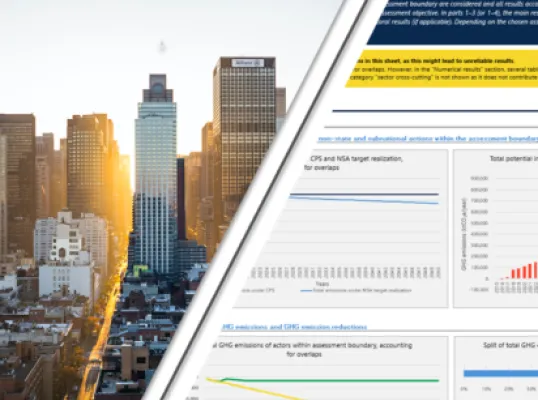
The Climate Action Aggregation Tool (CAAT) supports government experts, analysts and policymakers to identify, quantify and aggregate the impact of non-state and subnational actions. As a result, they can be integrated into mitigation targets, projections and scenarios in support of...
Read More
guide
Integrating Subnational and Non-State Actors into M&E Systems for Adaptation
Multiple actors involved in the planning and implementation of climate change adaptation. Policy-owners need to take the actions of sub-national and non-state actors into account when tracking the progress being made towards achieving the objectives of national adaptation policies.
Read More

Aggregating the impacts of non-state and subnational climate actions: an exploration of methods
This paper discusses methodological assumptions to estimate the collective impact of mitigation commitments and targets of non-state and subnational entities. It serves as a supplement to the ICAT Non-State and Subnational Action Methodology. The paper will facilitate users in employing...
Read More
Language Options for the ICAT Toolbox
ICAT’s toolbox is primarily developed in English to ensure broad accessibility worldwide. Recognizing the diverse needs of countries and regions, we have translated key tools and guides into additional languages based on priority demands. If your country or organization requires a specific ICAT tool or guide in another language, we encourage you to reach out to the ICAT Secretariat. We are committed to supporting your needs and will carefully consider your request.
*The following guides will soon be available in French: Agriculture Methodology, Guide for navigating the links between Articles 6 and 13, Just Transitions Monitoring Guide, Stakeholder Participation Methodology, Sustainable Development Methodology









If your country or organization requires a specific ICAT tool or guide in another language, we encourage you to reach out to the ICAT Secretariat. We are committed to supporting your needs and will carefully consider your request.